
Security & Compliance
Trust isn’t optional
ProspectsRadar is designed for B2B teams who need confidence that their data is handled responsibly. That means a strong foundation in privacy, transparency, and operational security — built in from day one, not added later. We treat trust as a core product requirement because without it, even the best intelligence is hard to use.
Our approach combines practical controls with common compliance expectations. We prioritize data minimization, clear purpose limitation, and access boundaries so information is only used for the reasons it was collected. We aim for transparent workflows that allow teams to understand what data is in the system, how it got there, and who touched it.
Operationally, this translates into role‑based access controls, auditability, and structured data handling. Teams can assign access based on role, keep sensitive workflows limited to the right people, and review activity when needed. This is especially important for organizations with compliance requirements or strict internal governance.
We also align with widely accepted legal and compliance practices, such as privacy‑by‑design, lawful processing, retention discipline, and transparency in AI‑driven insights. These principles help teams meet internal policies and external regulations without introducing heavy operational friction.
In short, security and compliance aren’t a checkbox in ProspectsRadar — they’re part of the product’s daily behavior. The goal is to make responsible use the default, so teams can move fast without sacrificing trust.
Our approach combines practical controls with common compliance expectations. We prioritize data minimization, clear purpose limitation, and access boundaries so information is only used for the reasons it was collected. We aim for transparent workflows that allow teams to understand what data is in the system, how it got there, and who touched it.
Operationally, this translates into role‑based access controls, auditability, and structured data handling. Teams can assign access based on role, keep sensitive workflows limited to the right people, and review activity when needed. This is especially important for organizations with compliance requirements or strict internal governance.
We also align with widely accepted legal and compliance practices, such as privacy‑by‑design, lawful processing, retention discipline, and transparency in AI‑driven insights. These principles help teams meet internal policies and external regulations without introducing heavy operational friction.
In short, security and compliance aren’t a checkbox in ProspectsRadar — they’re part of the product’s daily behavior. The goal is to make responsible use the default, so teams can move fast without sacrificing trust.
Privacy by design
We take a privacy‑first approach from the beginning of product design through day‑to‑day operations. Data is collected only when it’s necessary to deliver prospect intelligence, and we aim to keep it as limited, structured, and purpose‑bound as possible. That means we avoid gathering information “just in case,” and we keep clear boundaries around how data is used and retained.
Practically, this shows up as data minimization, separation of concerns, and clear auditability. We structure data so teams can understand what was collected, why it was collected, and how it was used. We also keep workflows traceable so privacy and compliance teams can review usage without needing to reconstruct activity from scratch.
We also align with common legal and compliance expectations such as purpose limitation, transparency, access controls, and retention discipline. Teams can define who has access to what, and for how long, so data doesn’t outlive its intended use. That reduces risk while keeping the system usable for sales and marketing teams.
In short, privacy by design isn’t just a policy statement — it’s a set of practical guardrails that makes it easier to operate responsibly and comply with internal governance and external regulations, without slowing down day‑to‑day work.
Practically, this shows up as data minimization, separation of concerns, and clear auditability. We structure data so teams can understand what was collected, why it was collected, and how it was used. We also keep workflows traceable so privacy and compliance teams can review usage without needing to reconstruct activity from scratch.
We also align with common legal and compliance expectations such as purpose limitation, transparency, access controls, and retention discipline. Teams can define who has access to what, and for how long, so data doesn’t outlive its intended use. That reduces risk while keeping the system usable for sales and marketing teams.
In short, privacy by design isn’t just a policy statement — it’s a set of practical guardrails that makes it easier to operate responsibly and comply with internal governance and external regulations, without slowing down day‑to‑day work.
Summary
GDPR‑aligned by default
ProspectsRadar is built with European standards in mind. That includes:
Responsible AI
We believe AI should support decisions, not replace them. That’s why ProspectsRadar uses explainable scoring rather than black‑box ranking. You can see why a prospect was scored a certain way, and you can adjust the criteria to reflect your strategy.
Transparency isn’t just ethical — it’s practical. It builds trust inside your team and reduces risk in how AI‑driven outputs are used.
Transparency isn’t just ethical — it’s practical. It builds trust inside your team and reduces risk in how AI‑driven outputs are used.
Security That Scales With Your Team
ProspectsRadar combines role‑based access and governance, integration security, and operational safeguards into one coherent security posture designed for real‑world teams. User‑level permissions, team roles, and activity logging help you control who can view or change sensitive data — especially important when multiple departments, regions, or partners are involved. This keeps internal access aligned with responsibility and reduces the risk of accidental exposure.
When ProspectsRadar connects to CRMs or other external systems, it uses clear permission scopes and secure authentication patterns so you stay in control of data flow. Access can be reviewed or revoked at any time, which is critical for maintaining compliance when tools or vendors change.
On the operational side, we follow common security practices such as strong authentication and session management, controlled access to sensitive actions, audit trails for key changes, and structured data storage with defined lifecycle handling. Together, these measures help teams meet internal governance standards and external compliance requirements without making security feel heavy or slow.
When ProspectsRadar connects to CRMs or other external systems, it uses clear permission scopes and secure authentication patterns so you stay in control of data flow. Access can be reviewed or revoked at any time, which is critical for maintaining compliance when tools or vendors change.
On the operational side, we follow common security practices such as strong authentication and session management, controlled access to sensitive actions, audit trails for key changes, and structured data storage with defined lifecycle handling. Together, these measures help teams meet internal governance standards and external compliance requirements without making security feel heavy or slow.
Transparency for Your Customers
When you engage prospects using AI‑assisted insights, you need to be confident about where those insights come from and how they were produced. ProspectsRadar provides transparency at the point of use, so your team can explain the basis of an outreach decision in clear, practical terms. This helps ensure that AI is a decision‑support tool rather than a black‑box decision maker.
From a legal and compliance perspective, transparency supports common expectations around fair processing, explainability, and accountability. If a prospect or compliance team asks why a company was targeted or why a message referenced a specific signal, you can point to documented criteria, scoring factors, and observed signals rather than opaque AI output. That makes it easier to align with internal policies and external regulations that require clear justification for data‑driven decisions.
Practically, this also improves sales quality. When reps understand why a company is prioritized, they can write better outreach, avoid generic messaging, and reduce the risk of saying the wrong thing. Transparency also helps your team identify when a signal is weak, outdated, or irrelevant — so they can make a human judgment instead of blindly following a score.
In short, transparency protects trust on both sides: your customers can explain their reasoning ethically and confidently, and your prospects are engaged based on accountable, understandable insights rather than hidden logic.
From a legal and compliance perspective, transparency supports common expectations around fair processing, explainability, and accountability. If a prospect or compliance team asks why a company was targeted or why a message referenced a specific signal, you can point to documented criteria, scoring factors, and observed signals rather than opaque AI output. That makes it easier to align with internal policies and external regulations that require clear justification for data‑driven decisions.
Practically, this also improves sales quality. When reps understand why a company is prioritized, they can write better outreach, avoid generic messaging, and reduce the risk of saying the wrong thing. Transparency also helps your team identify when a signal is weak, outdated, or irrelevant — so they can make a human judgment instead of blindly following a score.
In short, transparency protects trust on both sides: your customers can explain their reasoning ethically and confidently, and your prospects are engaged based on accountable, understandable insights rather than hidden logic.
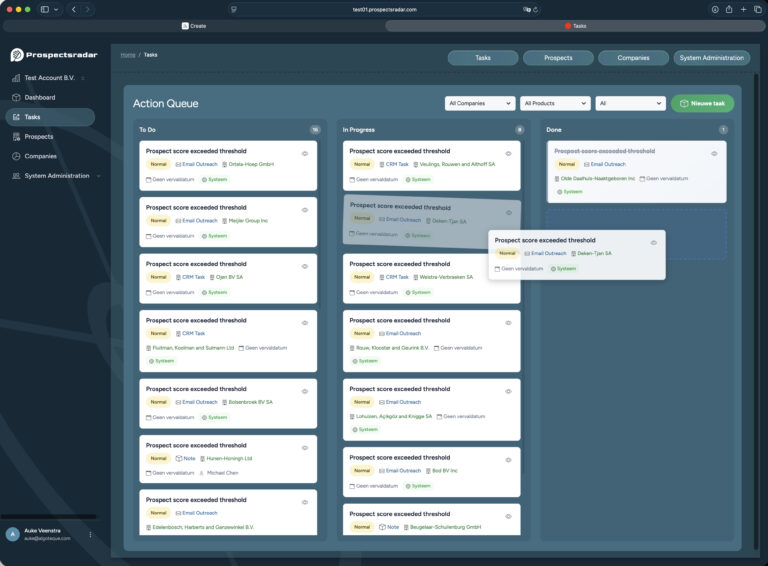
You’re Not Losing Deals to Competitors. You’re Losing Them to Timing
There’s a conversation that happens on every sales team, usually on a Friday afternoon. Someone lost a deal.…
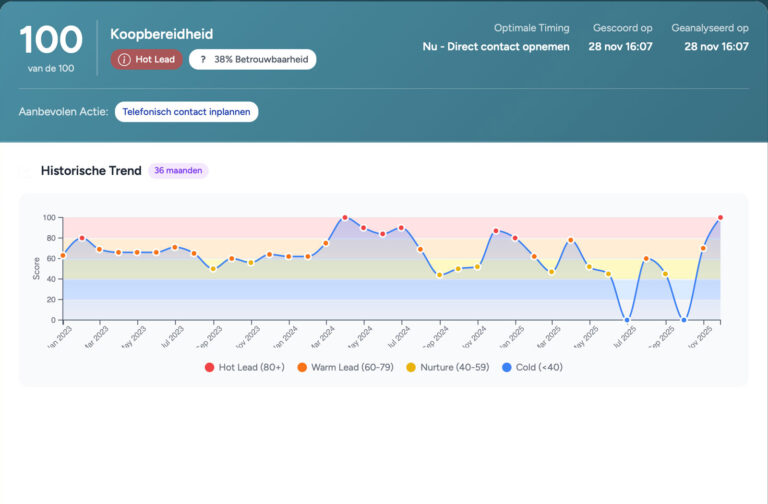
What ProspectsRadar Actually Does — And Why AI Alone Won’t Get You There
Someone on your team has probably said it already. “Why don’t we just use AI to find leads?”…
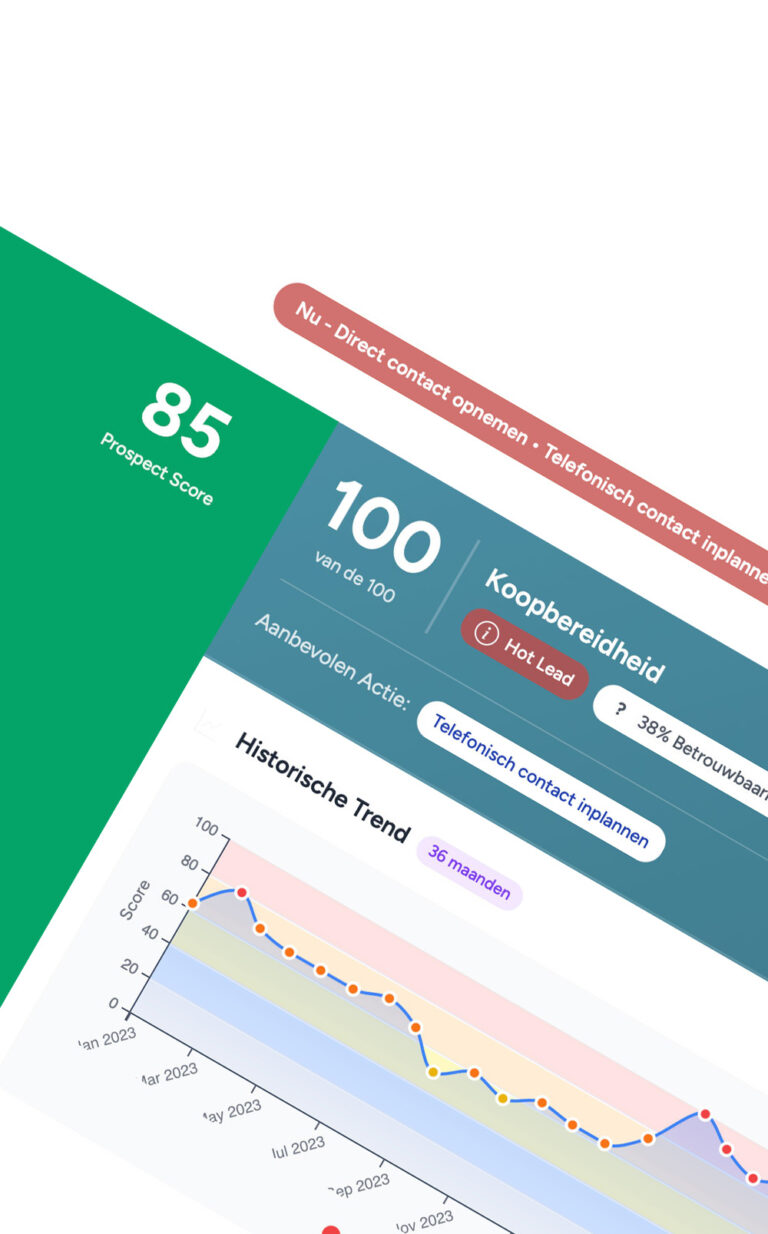
We Built ProspectsRadar Because Nothing Else Worked
Before we built ProspectsRadar, we were exactly where you are now. We’re entrepreneurs. We’ve run businesses. We know…