
Before we built ProspectsRadar, we were exactly where you are now.
We’re entrepreneurs. We’ve run businesses. We know what it feels like to sit down on a Monday morning, look at an empty pipeline, and think: I need to find new customers this week. Not next quarter. This week.
So we did what everyone does. We tried everything.
We started with email lists.
The big ones. The kind that promise “verified decision-makers in your target market.” Thousands of contacts, neatly organized by industry, company size, and job title. It felt like progress. We loaded them into our outreach tools, wrote what we thought were compelling messages, and hit send.
The open rates looked acceptable on paper. But replies? Almost nothing. Ninety-five percent silence. And the few people who did respond usually had no need for what we were offering. They were the wrong people at the wrong time. We’d bought a haystack and were told there were needles in it. There weren’t.
Then we moved to LinkedIn.
This was supposed to be the smarter approach. Hand-picked prospects. Personalized connection requests. Carefully crafted messages that referenced something specific about their company or role.
We spent hours scrolling through profiles, researching companies, writing individual notes. We even got decent at it. But “decent” still meant sending a hundred messages to get five replies — and most of those five were polite versions of “no thanks.” The targeting was better than bulk email, but the fundamental problem was the same: we had no way of knowing who actually needed what we offered right now. We were still guessing. Just more slowly.
So we hired agencies.
If we couldn’t crack it ourselves, surely the professionals could. They promised meetings. Ten qualified conversations a month. Fifteen. Some promised more. The pitches were compelling. The results were not.
The meetings they delivered were often with people who had been pressured into a call, not people who genuinely wanted one. The cost per meeting was staggering. And the conversion from those meetings to actual business? Almost zero. We tried three different agencies over two years. The pattern was always the same: high expectations, underwhelming results, and invoices that kept coming regardless.
We weren’t angry at the agencies. Most of them were trying. But they had the same fundamental problem we did — they were guessing. They were reaching out to people based on job titles and company sizes, not based on actual buying signals. It’s the only playbook they had.
The real cost across all of it wasn’t the money. It was the time.
Hours of research, hours of writing, hours of follow-up — all pointed at people who were never going to buy. Not because our product wasn’t good. Because we had no way of knowing who actually needed it right now.
So we turned to AI. This was supposed to be the breakthrough.
And honestly, at first it felt like one. We fed company data into language models, asked them to identify ideal prospects, and got results that looked impressive. Detailed profiles. Logical reasoning. Confident recommendations.
But after a few weeks, something started to feel off.
The same prompt would produce different answers on different days. Companies that scored highly one week would disappear the next. The AI would confidently present information that simply wasn’t true — citing partnerships that didn’t exist, describing products a company had never offered, assigning intent signals based on nothing.
It was hallucinating. Not occasionally. Regularly. And the worst part was how convincing it sounded while doing it.
We realized something that changed our entire approach: AI is extraordinarily powerful, but only when you refuse to trust it blindly. Left to its own devices, it will give you an answer every single time — whether it has a real one or not.
That’s when we stopped treating AI as an oracle and started treating it as a tool that needed strict supervision.
We built rules. Not guidelines — rules. Every claim the AI made had to be verifiable. Every data point had to trace back to a real source. Every prospect profile had to pass through validation layers before it reached a human. We cross-referenced outputs against multiple data points. We built feedback loops that caught inconsistencies before they could compound.
Slowly, the noise disappeared. What remained was signal.
For the first time, we had a process that consistently identified companies that genuinely matched our offering. Not based on assumptions. Not based on guesswork. Based on verified, structured intelligence.
But then we ran into the next problem. One we hadn’t anticipated.
The right companies weren’t always ready.
We’d identify a perfect match — right industry, right size, right pain point — and reach out. Nothing. Not because they weren’t a fit. Because the timing was wrong. They were mid-contract with a competitor. Or they’d just started a different initiative. Or the budget cycle hadn’t come around yet.
A great prospect at the wrong moment is the same as no prospect at all.
That’s when we started asking a different question. Not just who should we talk to? but who is ready to talk to us right now?
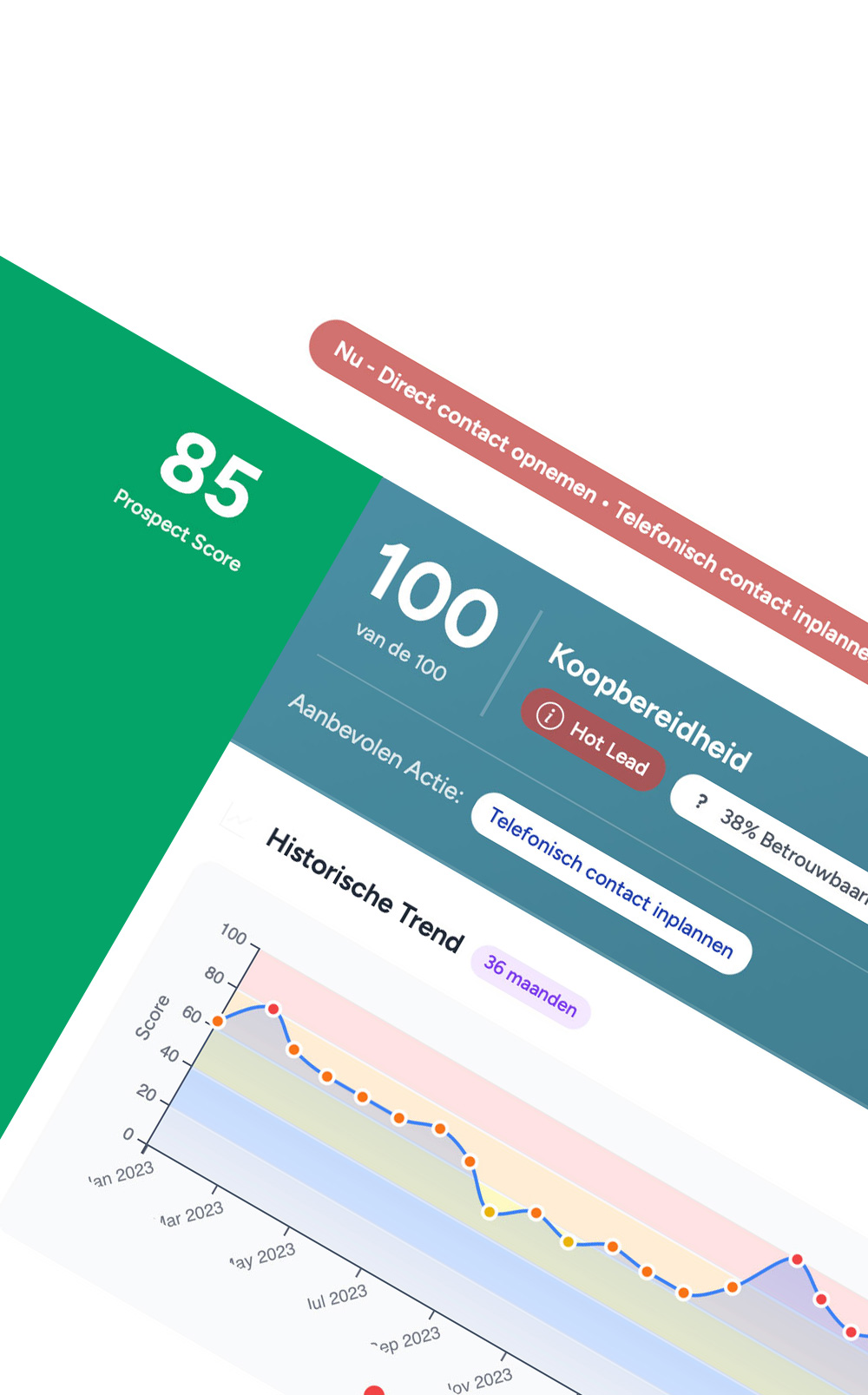
We built what we call Buyer Readiness.
A way to look beyond the static profile and understand where a company actually sits in their buying journey. Are they actively researching solutions? Have they shown signals of change — new leadership, funding rounds, strategic shifts? Is the window open, or is it closed?
This changed everything.
Instead of reaching out to a hundred companies and hoping, we could focus on the handful that were actually in motion. The conversations were different. Warmer. More productive. Because we weren’t interrupting people — we were arriving at the right moment.
That’s what ProspectsRadar is.
It’s not another lead list. It’s not another outreach tool. It’s the system we wished existed when we were still guessing. One that finds the right companies, verifies they’re a real match, and tells you when they’re actually ready to hear from you.
We built it because we needed it. And we suspect you need it too.
Not because you’re doing something wrong. But because the old way of finding new business quietly stopped working a long time ago — and most of us have been compensating with effort ever since.
There’s a better way. We know, because we tried every other option first.